Where the Golden Age Met the Machine Age
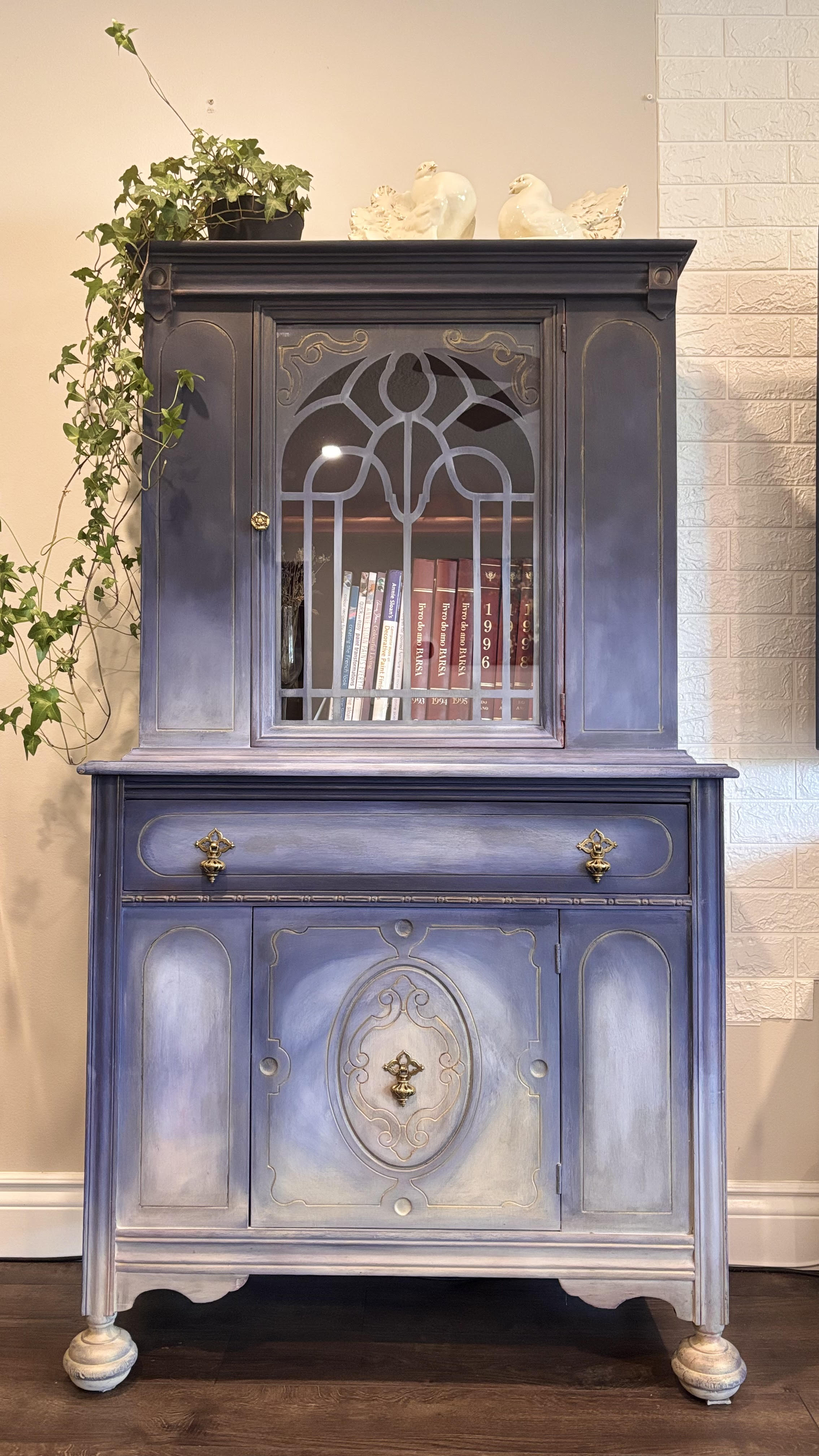
This two-piece Art Deco china cabinet is a testament to the 1920s and 1930s—an era when geometric precision met restrained ornament, when craftsmanship embraced modern forms without abandoning elegance. The piece marries sky and water through a wet-blended palette of Oxford Blue and Cream, accented with warm gold gilding wax on carved details. When the doors open, a surprise awaits: a Burgundy interior that glows behind glass, transforming everyday display into theater.
Art Deco was the last great decorative movement to insist that function could be beautiful. This cabinet honors that philosophy: every carved scroll, every geometric glass panel, every turned ball foot serves both purpose and poetry. The exterior evokes calm and luxury; the interior brings warmth and drama. Together, they create a piece that is both statement and storage, both art and architecture.
The Art Deco Palette
Sky and Water, Gold and Wine
Oxford Blue
Deep naval blue with gray undertones; the dominant exterior color; evokes both sky and sea
Cream
Soft warm off-white blended into the blue; creates atmospheric transitions and visual softness
Gold Gilding Wax
Warm metallic highlights applied via dry-brush technique to carved details and raised ornament
Burgundy Interior
Rich wine-red interior that glows behind glass and creates dramatic contrast with the cool exterior
The Language of Art Deco
Geometry, Restraint, and Modern Luxury
Geometric Precision
Art Deco was born from Cubism, Constructivism, and the machine aesthetic. Unlike earlier decorative movements that relied on flowing organic forms (think Art Nouveau), Art Deco embraced straight lines, angular patterns, and repeating motifs. Look at the glass tracery on this cabinet's center door: crisp geometric divisions create a visual grid that is both functional (reinforces the glass) and beautiful.
The crown molding, turned ball feet, and carved scrollwork are all restrained—decorative but not overwrought. This is the hallmark of Art Deco: ornament that knows when to stop.
The Two-Tone Strategy
The wet-blended Oxford Blue and Cream create an atmospheric transition across the cabinet's surface—like sky meeting water, or twilight fading into night. This technique was applied while the paint was still wet, allowing the colors to merge organically without harsh boundaries.
The gold gilding wax was then dry-brushed onto raised details—scrollwork, molding edges, carved panels—so that metallic warmth catches the light and guides the eye. Finally, clear wax followed by selective dark wax was applied to deepen shadows, create age, and give the piece a patinated museum-quality finish.
Construction & Form
Two-Piece Elegance with Display Theater
Two-Piece Design
The cabinet is composed of an upper hutch that sits atop a lower base. This modular construction makes the piece easier to move and allows for flexible placement. The two sections are designed to align perfectly, creating the visual impression of a single unified piece.
Central Glass Display
The upper hutch features a central glass door with Art Deco geometric tracery, flanked by two solid doors. The glass allows light to pass through, illuminating the Burgundy interior and transforming displayed items—china, glassware, books—into focal points.
Multiple Storage Options
The lower base offers additional cabinets and drawers for concealed storage. This dual functionality—display above, storage below—makes the piece practical for dining rooms, living rooms, or home offices.
Crown Molding & Turned Feet
The cabinet is crowned with layered molding that creates visual weight and authority. At the base, turned ball feet lift the piece elegantly off the floor, adding architectural grace and making cleaning underneath easier.
Carved Scrollwork
Restrained carved scrollwork decorates the door panels and edges. These details are highlighted with gold gilding wax, which catches light and adds warmth to the cool blue-and-cream palette.
Solid Wood & Durable Joinery
This cabinet was built during the 1920s–1930s, an era when furniture was constructed with traditional joinery—dovetails, mortise-and-tenon, and glued joints. The piece is solid wood, not veneer, ensuring it can be enjoyed for generations.
The Secret Within: Burgundy Interior
Drama Behind Glass
When you open the glass door, you're greeted by a rich Burgundy interior—a warm, wine-red that glows behind glass and creates a theatrical backdrop for displayed items. This is not just decorative whimsy; it's a calculated design choice rooted in Art Deco's love of dramatic contrast.
Why Burgundy?
- Contrast: The cool Oxford Blue exterior and warm Burgundy interior create visual tension and interest
- Illumination: When light passes through the glass, the Burgundy glows, making displayed items appear more precious
- Protection: The interior was waxed for durability, protecting the paint from moisture and wear
- Historical Accuracy: Art Deco interiors often featured bold, jewel-toned colors—emerald, ruby, sapphire—to create surprise and luxury
The Burgundy interior transforms this cabinet from furniture into theater. Every time you display a piece of china, a glass vase, or a collection of books, the warm red background elevates the ordinary into art.
The Finishing Process
Wet Blending, Gilding, and Two-Wax Patina
Wet Blending: Oxford Blue & Cream
Oxford Blue and Cream were applied to the cabinet while both colors were still wet, then blended directly on the surface using a brush or cloth. This technique creates soft atmospheric transitions without harsh lines—like clouds drifting across a twilight sky.
Wet blending requires speed and confidence: once the paint begins to dry, blending becomes difficult. The artist must work in sections, maintaining a "wet edge" to ensure seamless transitions.
Gold Gilding Wax: Dry-Brush Highlights
Once the blended base was dry, gold gilding wax was applied using a dry-brush technique. A small amount of wax was loaded onto a stiff brush, then most of it was wiped off. The nearly-dry brush was then lightly dragged across raised details—carved scrollwork, molding edges, turned feet—so that only the high points caught the gold.
Why dry-brush? This technique ensures that gilding appears aged and selective, as if centuries of handling and wear have naturally worn away everything except the most prominent features.
Clear Wax: Sealing and Deepening
The entire exterior was then coated with Annie Sloan Clear Wax, which seals the paint, deepens the colors slightly, and creates a soft satin sheen. The wax was applied with a brush, then buffed with a clean cloth to remove excess and create an even finish.
Dark Wax: Selective Aging
Finally, Annie Sloan Dark Wax was applied selectively—into crevices, along molding edges, around hardware, and inside carved details. This creates the appearance of age and shadow, suggesting that the piece has lived a long life and accumulated natural patina over time.
The two-wax method (clear followed by selective dark) is a hallmark of museum-quality furniture restoration. It creates depth, dimension, and authenticity without making the piece look artificially distressed.
Burgundy Interior: Waxed for Protection
The interior was painted in Burgundy, then sealed with clear wax to protect the surface from moisture and wear. This ensures that the vibrant color will last for decades, even with regular use.
Living With Art Deco
Placement, Purpose & Visual Impact
Dining Room Display
Use this cabinet to display fine china, crystal glassware, and heirloom silver. The Burgundy interior creates a dramatic backdrop that makes every piece shine. Pair with Art Deco dining chairs, a geometric rug, and brass candlesticks.
Living Room Statement
Position the cabinet as a focal point in your living room. Display books, decorative objects, or a curated collection behind glass. The Oxford Blue and Cream palette pairs beautifully with cream sofas, navy accent pillows, and gold-framed mirrors.
Bedroom Elegance
In a large bedroom, this cabinet can serve as a wardrobe alternative or display case for jewelry, perfume bottles, or vintage accessories. The Burgundy interior adds warmth and intimacy to the space.
Home Office Sophistication
Store files, books, or supplies in the lower cabinets while displaying awards, framed photos, or art objects behind the glass door. The geometric tracery and gilded details bring Art Deco elegance to a professional space.
Color Coordination Guide
This cabinet coordinates beautifully with:
- Navy, Oxford Blue, and Charcoal Gray: Create a monochromatic scheme with depth
- Cream, Ivory, and Warm White: Soften the palette and add elegance
- Gold, Brass, and Bronze Metals: Echo the gilding and add warmth
- Burgundy, Crimson, and Wine Red: Tie in the interior and add dramatic accents
- Sage Green, Olive, and Forest Green: Introduce natural contrast and balance
Care & Maintenance
Preserving Art Deco Elegance
Regular Dusting
Dust the cabinet weekly with a soft, dry cloth or microfiber duster. Pay special attention to carved details, glass tracery, and crown molding, where dust can accumulate.
Avoid Harsh Chemicals
Never use commercial furniture polish, ammonia-based cleaners, or abrasive sponges. These can strip the wax finish, damage the paint, or dull the gold gilding.
Re-Waxing Every 1–2 Years
To maintain the soft satin sheen and protective finish, re-apply Annie Sloan Clear Wax every 1–2 years. Use a brush to apply a thin coat, let it sit for 10–15 minutes, then buff with a clean cloth.
Wipe Spills Promptly
If liquid spills on the surface, wipe it immediately with a barely damp cloth, then dry the area thoroughly. Prolonged moisture can damage the wax finish and penetrate the paint layers.
Avoid Direct Sunlight
Prolonged exposure to direct sunlight can fade the Oxford Blue and Cream finish. Position the cabinet away from windows or use curtains/blinds to filter UV rays.
Keep Away from Heat Sources
Do not place the cabinet near radiators, fireplaces, or heating vents. Heat can cause the wood to dry out, crack, or warp, and can soften the wax finish.
Move as Two Sections
When moving the cabinet, separate the upper hutch from the lower base. This makes the piece easier to carry and reduces the risk of structural damage. Always lift—never drag—to protect the turned ball feet.
Glass Tracery Care
Do not spray cleaners directly onto the glass door. Instead, spray cleaner onto a cloth, then wipe the glass gently. This prevents liquid from seeping into the wooden tracery and damaging the paint or wax.
Investment in Art Deco Elegance
More Than Storage—A Statement of Taste
This Art Deco china cabinet is not just furniture—it's a statement of refined taste, a piece of design history, and a functional work of art. Every element, from the wet-blended color transitions to the gilded scrollwork to the Burgundy interior, was chosen and executed with intention.
Museum-Quality Finishing
The two-wax patination, gold gilding, and wet blending are techniques used by professional furniture restorers and museums. This is not a quick DIY project—it's craft at the highest level.
Solid Wood Construction
Built during the 1920s–1930s, this cabinet features traditional joinery, solid wood panels, and durable hardware. It was designed to last for generations, not just years.
Design Versatility
The Oxford Blue and Cream palette is timeless and adaptable. This piece works in traditional, contemporary, coastal, and eclectic interiors, making it a versatile investment.
Theatrical Display
The Burgundy interior and central glass door transform everyday storage into visual theater. Every displayed item becomes more precious, more beautiful, more intentional.
"Art Deco was the last decorative movement to insist that beauty and function were inseparable. This cabinet honors that philosophy—every carved scroll, every gilded detail, every color choice serves both purpose and poetry."
Dimensions
Exact dimensions may vary slightly due to the handcrafted nature of vintage construction. Measurements shown are approximate.